Introduction: When deploying cloud services in the Asia-Pacific hub city of Singapore, latency is an important indicator of user experience and internal synchronization performance. This article focuses on "How much of the Singapore cloud server delay falls within the boundaries of normal fluctuations and abnormal alarms", and combines common influencing factors, reference intervals and alarm strategies to help the operation and product teams develop executable monitoring and response standards.
Latency usually refers to the time required from the client to initiate a request to receive the response, commonly expressed as RTT (round trip delay) or one-way delay. Latency is affected by a combination of network and host performance and application processing time. Understanding the components of latency can help distinguish network link problems, server load, or application processing bottlenecks, thereby developing more accurate alarm logic.
Latency variation comes from a variety of sources, including physical distance, routing paths, network congestion, intermediate node processing, packet loss, and server-side queuing. Internal cloud platform virtualization, noisy neighbors, and disk or database responsiveness can also amplify latency fluctuations. Identifying the main causes is the prerequisite for setting reasonable thresholds.
The geographical location directly determines the physical fiber transmission delay. The closer the physical distance between users and the Singapore data center, the lower the theoretical minimum latency. For communication in the same city or in the same availability zone, physical transmission is usually not the main bottleneck, and the delay is more determined by the processing time of network equipment and hosts.

Network routing, bandwidth saturation, and congestion control can cause jitter and packet loss, significantly increasing perceived latency. Short-term burst traffic usually manifests itself as a temporary increase in latency, while continued congestion will cause a long-term increase in latency, accompanied by an increase in packet loss rate. This is a combination of indicators that should be focused on when alerting.
For Singapore cloud servers, the reference delay range can be used as the basis for initial judgment (for reference only): the same availability zone/computer room is usually on the order of 1–5 milliseconds; different computer rooms in the same region are usually on the order of 5–20 milliseconds; other countries in the Asia-Pacific are usually 20–80 milliseconds; across the ocean to Europe and the United States, it is common to exceed 100 milliseconds. The actual baseline needs to be obtained through sampling.
It is recommended to first collect enough historical data to calculate p50/p95/p99 quantiles. Commonly used strategies: Double the alarm relative to the baseline or base it on the quantile. For example, when p95 continues to exceed 2 times the baseline and lasts for more than a few minutes, an alarm will be triggered; for user-sensitive services, an absolute threshold can be set (such as delay >100ms or packet loss >1%) as a serious alarm.
Monitoring should include latency quantiles (p50/p95/p99), jitter, packet loss and throughput, combined with host CPU, disk and application response times. It is recommended to deploy synthetic monitoring (initiated from different regions) and passive monitoring (real traffic), and use tools such as traceroute and mtr for link tracking to locate bottleneck nodes.
Optimization directions include routing and peering optimization, reasonable deployment of CDN or edge nodes, connection and protocol tuning (such as TCP parameters, concurrent retry strategy), database read-write separation and caching, as well as elastic expansion and contraction and traffic isolation. When encountering link problems, it is critical to work with cloud vendors or network operators to check routing and link quality.
Different services have different sensitivities to delays. Real-time communication and online games require extremely low latency and jitter, and more stringent p99 and real-time detection strategies should be used; web page loading and APIs can tolerate higher peaks, but attention needs to be paid to p95 and error rates; database replication and backup focus on persistent delay and timing consistency, and alarms focus on delay persistence rather than instantaneous jitter.
Summary and suggestions: Regarding "how much of the Singapore cloud server delay falls within the boundaries of normal fluctuations and abnormal alarms", we must first establish a business-level baseline and use p95/p99 quantiles to evaluate fluctuations. Alarms should combine relative baselines and absolute thresholds, and focus on composite indicators of delay, jitter, and packet loss. Review thresholds regularly, customize response processes based on different services, and maintain collaborative troubleshooting channels with cloud network providers.
- Latest articles
- Popular tags
-
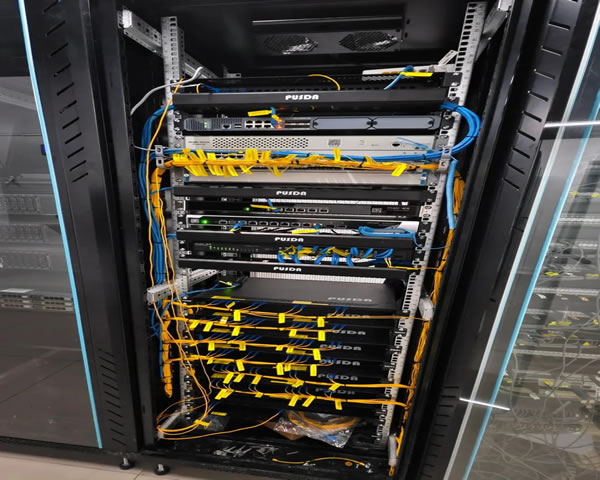
Deploying SSR Cloud Server Singapore FAQs And Troubleshooting Manual
For operation, maintenance and technical personnel who deploy SSR cloud servers in Singapore, it summarizes common problems, network and bandwidth diagnosis, firewall configuration, log troubleshooting and security and monitoring suggestions, and provides practical troubleshooting ideas. -

-
How To Download Files And Data On A Singapore Cloud Server
learn how to download files and data on singapore cloud servers, and master effective download methods and tools.